
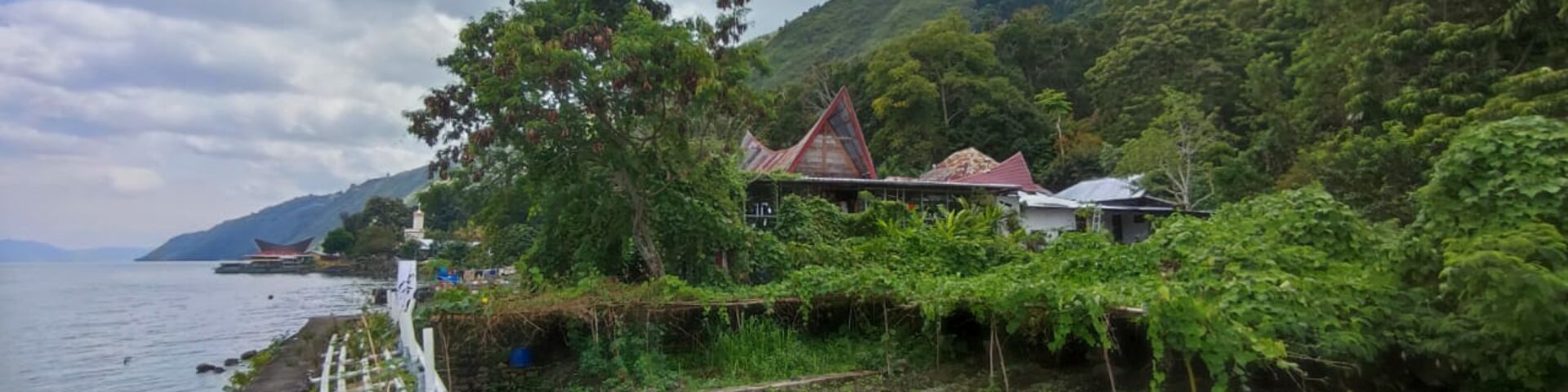
The waste all around the world is a huge problem. We try to produce as less as possible. We please all the guests if they come to our place: Don’t bring waste to our place. Like many places in Indonesia, we are still looking for complete solutions – and we are happy to share what works for us.
Collection
We collect all the materials, where is in Indonesia a solution for recycling:
- Glass
- Iron
- Aluminium
- PET and PE
- Karton
- Batteries
Reuse
A lot of things can be reused until the end. Here some easy examples for reusing things around us:
- Plastic bags getting reused for everything until they are totally broken
- Stand up pouches are getting used as polybags for seedlings
- Glass bottles we wash in the lake with sand and then we fill our wine inside
- Chemical drums are getting used for fermenting and storage of our wine
- All the food bags, sugar and flur bags getting used for everything until they are fully broken, then they are just biodegenerable
- All old iron we use for other things. Often we are welding out of this into new things.
From gradle to grave
We always think about to use the materials until there is Zero waste.
- Mango
We don’t spray our Mango trees anymore since 2013. But we collect all the falling down mangoes. They are not getting rotten in the forest anymore. Out of this there is no nutrition for the insects anymore. Out of this our mangos are only infected with around 30 % with worms without spraying. Otherwise 90 % of the mangos are infected.
Then we make jam, chutney, juice, wine and vinegar out of the mangos. To take out the juice we use old stainless drums from broken washing machines and do the traditional way of wine making and use our feet. Then, we mix the juice together with a strong yeast and sugar to the blue drums.
After fermenting, we sieve it with old curtains from a hotel. The trester we distill then to Sanitizer and Brandy. The rest is then directly used to prepare the food for our pigs. At the end, there is 100% no waste. The mango seeds are getting seedlings for new trees, which we sell also. - Candlenut
We collect our candlenuts. Then we open the outer skin. This we collect in a big open barrel. The Black Solder Fly will leave the egg inside. After a few days the worms growing. Then our chicken come and eat the worms. Therefore they already have a source of high proteins.
The inner hard skin, is getting used to fire our sauna, or for BBQ or also we sell it as material for BBQ
Then we procuce cold pressed Candlenut oil. We developed a high effective packaging for the oil and sell it from our house and also via Tokopedia.
The sediment from the oil is packed in jars as candlenut cream or oilcake. This sediment is good for peeling or for cooking.
We roast the cream at a minimum of 10 minutes above 130 Celsius to transformed the cyanide so we can use it like Almonds for baking.
At the end Zero Waste - Cinnamon
We pruce our own Cinnamon. We let grow a lot of cinnamon trees in our forest. If they are getting to use and disturb our mango trees, then it is time for harvesting them. For this the whole tree is cutted down to peel the skin. But we collect directly also the leaves. The leaves are getting dried and then we have an organic Cinnamon Leaf tea. This we are packing in Polybags and sell dirctly from our farm fo 50.000 Rp for 30 grams. Cinnamon leaf tea is still rare – it is tasty and a good use of the leaves.
The wooe we use for fireood or for construction. - This are just a few examples, we are working on much more. Like Water hyazinth, kankung, aren trees……..
Idea: One truck, two directions – a compost cycle for Samosir
Around 70 tonnes of waste are produced in Samosir every day (about 140,000 inhabitants × ±0.5 kg). More than half of it is wet, organic waste: kitchen scraps, market leftovers, garden cuttings. Burnt or dumped, it causes smoke, smell, methane and seepage that carries nutrients into Lake Toba. Composted, it becomes a product that farmers need.
The idea: a yellow Mitsubishi truck drives a fixed route. It collects wet waste from markets, hotels, restaurants and households – and on the same tour it delivers finished compost to onion, coffee and rice farmers, hotel gardens and nurseries. The cycle closes itself.
Investment (estimates, to be replaced by real offers)
| Mitsubishi Colt Diesel FE 71 with tipper body (new) – or used truck | Rp 500–550 million (used: ±250 million) |
| Roofed composting yard, 300–400 m², concrete floor, seepage channel | Rp 300–400 million |
| Shredder for organic material and sieve | Rp 40–75 million |
| ±1,000 collection buckets and 50 bins (120 l) | Rp 60–80 million |
| Scale, tools, bags with logo, training | Rp 30–50 million |
| Total set-up | about Rp 0.95–1.15 billion |
Operation and effect
- 6 people (1 driver, 2 loaders, 3 compost workers), diesel and maintenance: about Rp 25–30 million per month.
- ±2–3 tonnes of wet waste collected per day – a first 5 % of Samosir’s organic waste. A second truck doubles it.
- ±200–250 tonnes of compost per year.
- Income: compost sales (Rp 1,500 loose to 3,000 in bags per kg, ±300–600 million per year) plus a pick-up fee from hotels and restaurants (e.g. 80 businesses × Rp 150,000 per month). From the second year the service can carry itself.
What it needs: households, markets and hotels that separate their waste – explained through churches, schools and village heads; good compost quality so farmers buy it; and a route that is driven reliably. Together with this service, the ban on open burning (UU 18/2008) can finally be enforced – because there is an alternative.
Plastic: a small pyrolysis plant as a demonstration
Pyrolysis heats plastic without oxygen and turns it into an oil similar to diesel. A machine for ±100 kg per batch with condenser, shredder, shed and oil cleaning costs about Rp 450–700 million. In practice it yields 0.6–0.7 litres of oil per kg (PE and PP only – no PVC, no PET), i.e. ±60–70 litres a day, about 1 % of Samosir’s plastic waste. It is a good showcase for schools and the press, but on its own it does not solve the plastic problem. Our recommendation: the compost cycle first, a small pyrolysis unit (Rp 150–200 million) as a demonstration at a school or at the composting yard.
An idea for Bapak Bupati: prize money for a clean Samosir. We have heard that Samosir has received prize money of around Rp 2 billion for cleanliness (we could not yet confirm this from an official source). If so, this would be the ideal use: about Rp 1.8 billion for the compost truck and yard – including a reserve for the first one and a half years – and about Rp 200 million for a small pyrolysis demonstration. The prize for a clean Samosir would keep Samosir clean.
All figures are estimates by the editors of Mangga Samosir News (Edisi 3, November 2026) and have to be replaced by real offers. Sources for comparison: BRIN pyrolysis prices (Bloomberg Technoz), pyrolysis pilot Sidorekso, Kudus (Antara Jateng), Mitsubishi Colt FE 71 prices (Zigwheels), Perda Pengelolaan Sampah Samosir 2026 (RRI).