
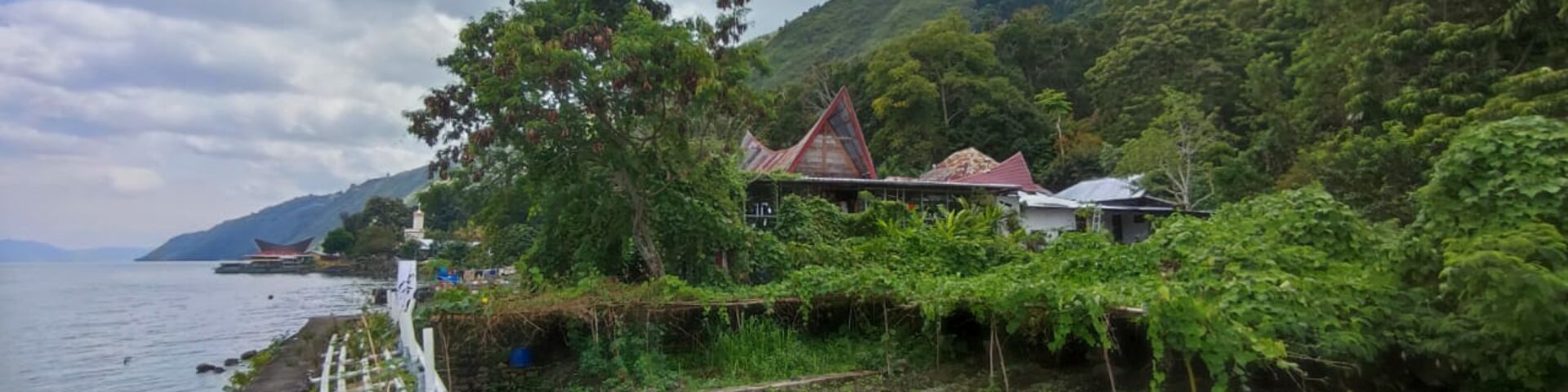
← Botanical Garden Silimalombu
Pastureweed
Cyathula prostrata (L.) Blume
Amaranthaceae
Location in our garden
Principal
Synonym
Achyranthes debilis Poir.
Achyranthes diffusa Moench
Achyranthes globosa Pers.
Habitus

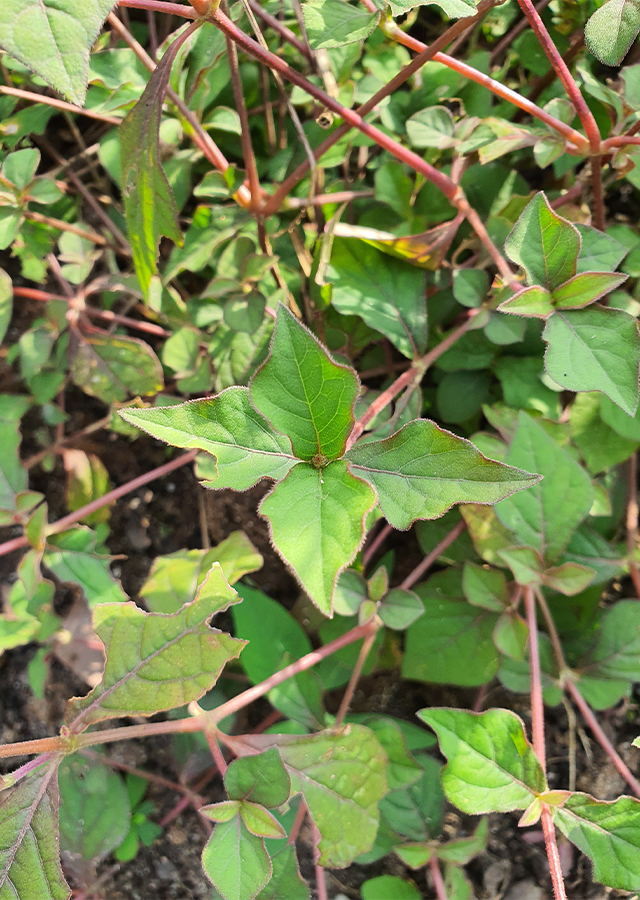
Herbaceous. An annual to perennial herb, which can grow up to a height of 30-50 cm tall
Part Used
 Leaves
 Flowers
 Latex
 Roots
 Stem
 The Whole Plant
Growing Requirements
 Need Shade
Habitat
 Forest
 Shrublands
 Grassland
Overview
Pastureweed is native to Africa, Asia and Papua New Guinea, Palau, Timor-Leste and North-East Australia in Oceania. It now has a pantropical distribution after being introduced in other countries in Oceania and in Central and South America. A weedy plant and is classed as an invasive species in a number of Pacific Islands. It is a well known herb used in Ayurveda medicine.
Vernacular Names
Rumput jarang-jarang (Indonesia), Nyarang (Malaysia), Andot ko (Cambodian), Yaa phaanngu lek (Thailand), Kinjan (Papua New Guinea), Bei xian (Chinese), Dayang (Philippines).
Agroecology
Cyathula prostrata has a weedy habit, plantations, rough pastures, along roadsides and in wet areas such as by swamps and streams, in teak forests, secondary forests, often gregariously and from sea level up to 1,650 m altitude.
Morphology
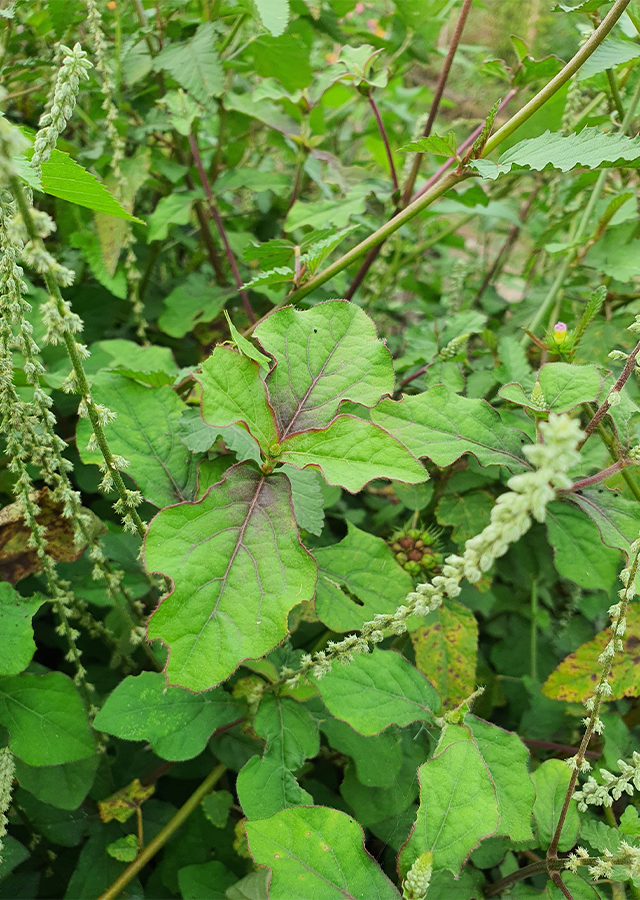
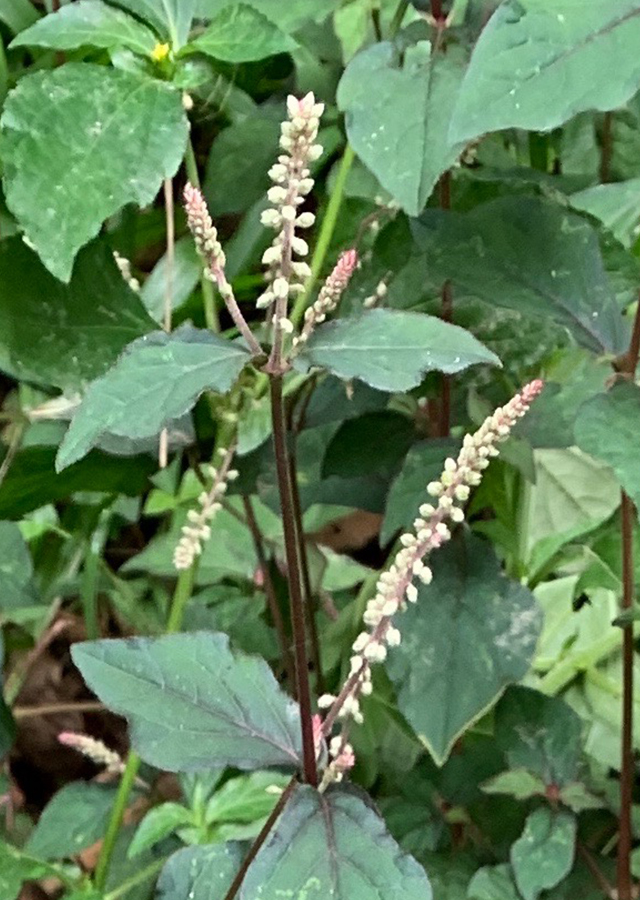
- Stems – obtusely quadrangular, thickened above the nodes, often tinged with red, covered with patent and fine hairs.
- Leaves – rhomboid-oblong, 2 to 8 cm long, and gradually tapering to an acute base.
- Flowers – numerous, greenish, ovoid, and about 3 mm long. Sepals are hairy.
- Fruits – ovoid capsule, very thin with almost membranous pericarp, measures 1.5-2 mm long, thin-walled, hairless, 1-seeded and surrounded by stiff perianth.
- Seeds – ovoid or ellipsoidal, measures 1-1.5 mm long and shiny brown. The seedling is with epigeal germination.
Cultivation
- By seeds.
- By stem cuttings – take cuttings of about 12 cm long to start new plants. Insert into well-draining fertile soil mix. Place the root cuttings under shelter initially. Once new growth appears, harden off the young plants before transplanting.
Chemical Constituents
Saponins, tannins, flavonoids, alkaloids, cardiac glycosides, steroids, essential oils, terpenes palmitic acid ester, diterpene, terpenoids, anthraquinones, phlobatannins.
Traditional Use and Research
The statements below describe nutrition facts, traditional use and published research. They are not health claims for our products.
- Pastureweed is a well-known herb in Ayurveda and is used in folk practice in a number of countries.
- Reported traditional folk uses include, for example: in Malaysia, a decoction of the aerial parts is drunk for coughs and a decoction of the roots for dysentery; in Thailand, a decoction of the stem is taken as a diuretic; in the Philippines and Guinea, ash of the burnt plant mixed with water is rubbed on the skin for skin ailments; in Cameroon, the plant is used for joint complaints. These are traditional uses only. They have not been confirmed by sufficient scientific evidence.
- Chemical analyses of the plant describe saponins, tannins, flavonoids, alkaloids, essential oils, terpenoids and other compounds. Laboratory and animal studies have examined extracts for antibacterial, antioxidant, anti-inflammatory and other properties. These are early findings, and no health effect in people can be concluded from them.
- Because some traditional uses concern serious conditions, the plant must never replace medical care. Pregnant women should avoid it.
Source: https://www.socfindoconservation.co.id/plant/648