
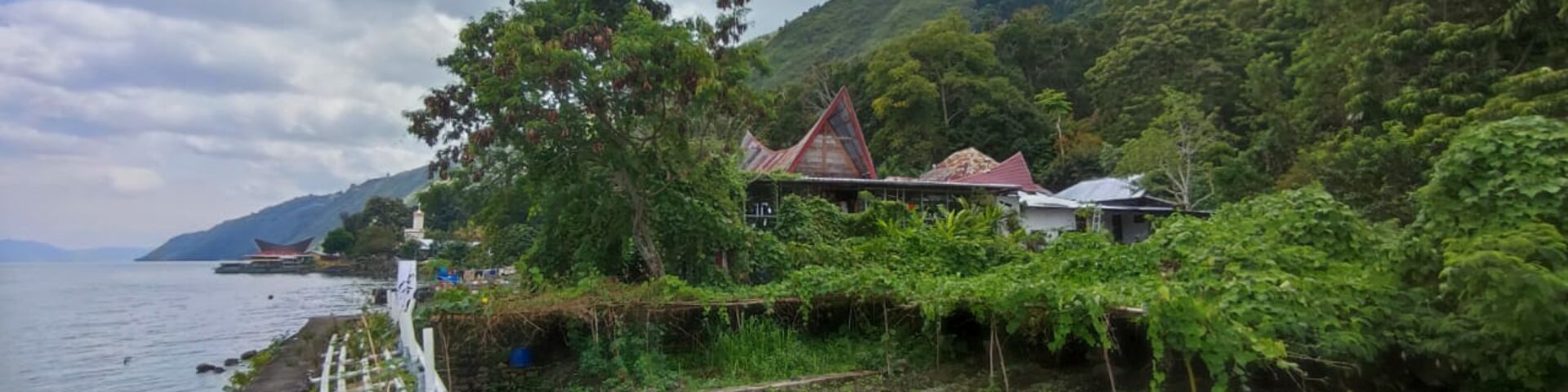
← Botanical Garden Silimalombu
Made from this plant – available in our shop

Basic Information
Papaya leaves are the leaves of the papaya tree (Carica papaya).They are large, oval-shaped, and have a smooth, glossy surface.They are typically dark green in color, but they can also be yellow or purple depending on the variety of papaya tree. Papaya leaves are a good source of vitamins A, C, and K, as well as fiber. They also contain antioxidants and other compounds that may have health benefits.
In traditional folk practice in many tropical countries, papaya leaves are used as a food and as a herbal tea or juice. In Indonesia the leaves are traditionally cooked as a vegetable. Papaya leaf is bitter.
Nutrition, Traditional Use and Research
The statements below describe nutrition facts, traditional use and published research. They are not health claims for our products.
- Traditional folk uses of papaya leaf that have been reported from different countries include use for fever, malaria, diabetes, digestive problems and skin problems. These are traditional uses only. They have not been confirmed by sufficient scientific evidence, and papaya leaf is not a replacement for medical care.
- Papaya leaves are a source of vitamins A, C and K and contain fiber. Vitamin C contributes to the normal function of the immune system, vitamin A to the maintenance of normal vision, vitamin K to the maintenance of normal bones, and fiber to normal bowel function.
- Laboratory and animal studies have examined papaya leaf extracts for antioxidant, anti-inflammatory and antimicrobial properties. These are early findings from cell and animal studies, and no health effect in people can be concluded from them.
- Some small studies have examined papaya leaf extract in people with dengue fever, in particular in relation to platelet counts. The results are mixed, and the evidence is not sufficient. Dengue fever can be life-threatening. Papaya leaf must never be used as a replacement for medical care; anyone with a fever, especially in a dengue area, should see a doctor promptly.
- Papaya leaf tea is made by steeping fresh or dried leaves in hot water for 5–10 minutes. Allergic reactions to papaya are possible, and side effects such as nausea or diarrhea can occur. If you are pregnant or breastfeeding, take medication or have a health condition, please ask a doctor before using papaya leaf in larger amounts or as an extract.