
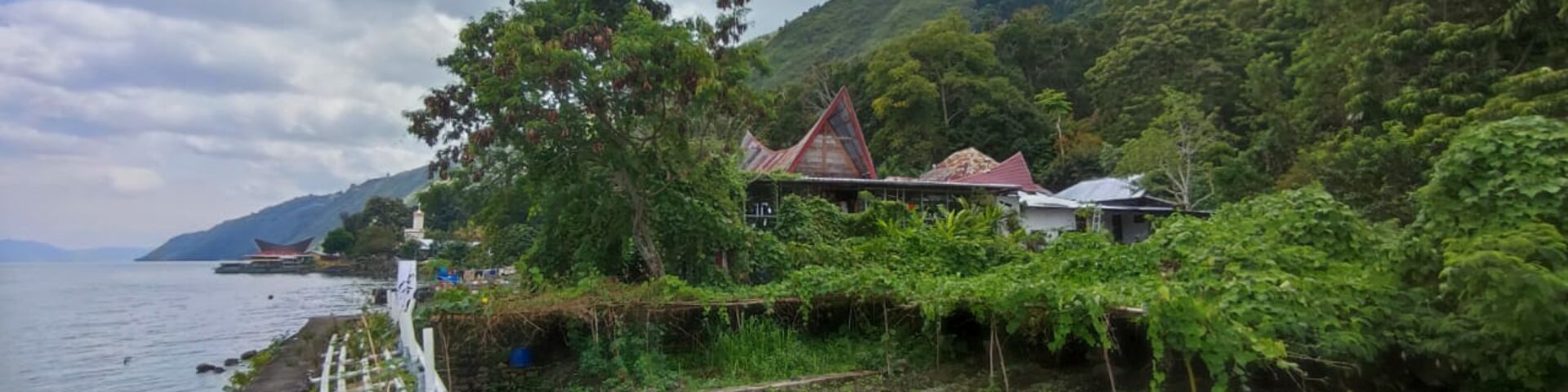
← Botanical Garden Silimalombu
Lantana camara is a perennial flowering plant found in tropical areas. It is indigenous to America and Africa but can be now found as an exotic species in many other places of Europe, Asia and Oceania.
The plant is known for its clustered flowers with an aromatic scent. The flowers show bright shades of yellow, orange, red and pink. Lantana camara is a popular ornamental shrub that is used for hedges, borders, ground cover and dry landscaping. It is drought and salt tolerant, and its flowers attract butterflies, bees and hummingbirds, which helps pollination in the garden.
In most regions Lantana camara is considered an invasive weed. It forms dense thickets, spreads quickly and is said to release substances into the soil that prevent the germination of native plants.
Uses, Safety and Traditional Use
- Important safety note: Lantana camara is poisonous and can damage the liver. Reviews of the scientific literature report liver toxicity in animals, and the toxic compounds (lantadenes) are found in the leaves and especially in the unripe berries. Do not eat, drink or brew any part of this plant; keep children and animals away from the berries. The plant can also cause skin irritation in sensitive people.
- In traditional folk practice in several countries, extracts of the leaves and other plant parts have been used for a number of complaints. Because of the toxicity of the plant, we strongly advise against any internal use. The traditional uses have not been confirmed by sufficient scientific evidence.
- Lantana essential oil is obtained from the leaves by steam distillation. It has a woody aroma with a note similar to basil and is used externally in traditional practice. We do not recommend self-treatment with lantana oil.
- The stems and fibers of Lantana camara are used for handicrafts and as a raw material for wood polymer composites for baskets, mats and pen cases, and long straight stems can be used as friction timber for starting a fire.