
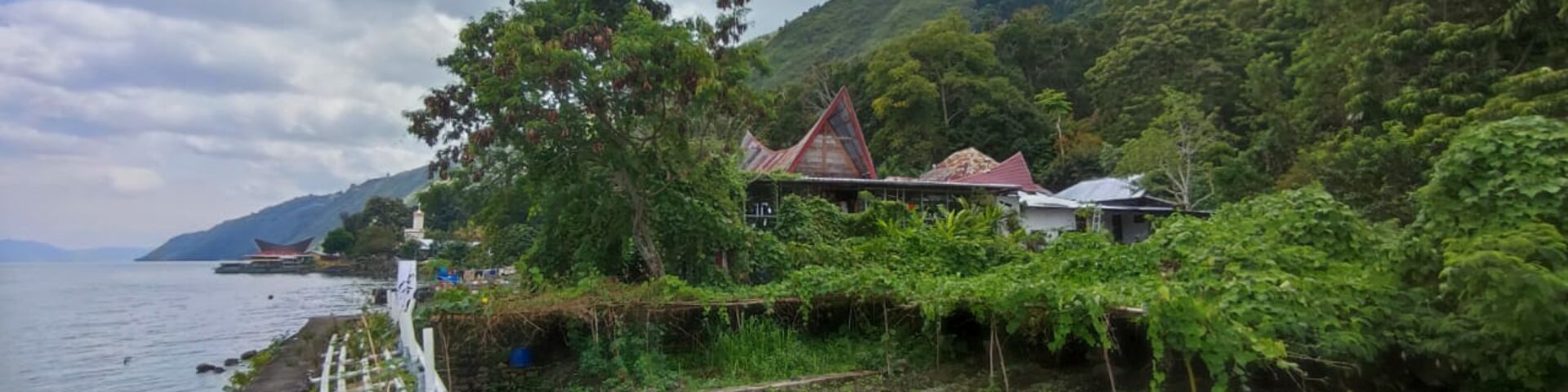
← Botanical Garden Silimalombu
Made from this plant – available in our shop


Kecombrang (torch ginger, also called kantan or honje; Etlingera elatior) is a herbaceous spice plant whose flowers, fruits and seeds are used as a vegetable. It has many local names: honje (Sundanese), kincung (Medan), bungong kala (Aceh), bunga rias (Tapanuli), asam cekala (Karo), kecicang (Bali), patikala (South Sulawesi) and daalaa in Thai.
The plant looks like an ornamental ginger with reddish flowers. It grows up to 5 m tall from a thick, creeping rhizome. The glossy green leaves are 20–90 cm long and often purplish underneath when young. The flower heads have pink to bright red bracts, and the fruits form a round cluster of 10–20 cm that turns from green to red and contains many blackish seeds with a sour white aril.
In the kitchen
- Kecombrang is mainly used as a spice and flavoring in many dishes of the Indonesian archipelago. In West Java the flower buds are eaten raw as lalap or boiled and served with sambal; in Banyumas steamed kecombrang is part of pecel; in Pekalongan it is finely sliced for megana; in Bali kecicang and the young stem (bongkot) are used for sambal matah; and in Malaysia and Singapore it is an important ingredient of laksa.
- In the Karo highlands the young fruit is called asam cekala. The buds and the young fruit are a main ingredient of sayur asam Karo and are used to take away the fishy smell when cooking fish. The famous Batak dish arsik (carp) also uses asam cekala, and in South Tapanuli the flower buds are cooked with cassava leaves as gule bulung gadung.
- In South Sulawesi the plant is known as patikala and is used for yellow fish soup (pallu mara), for kapurung and for vegetable dishes such as urap. Near Palabuhanratu the fruit and the heart of the shoots are used in sambal for grilled fish.
Other uses
- The pseudo-stem and the leaf sheaths can be bruised to produce a fragrant foam that is used as a natural soap. The rhizome gives a yellow dye in Sundanese tradition. Dried and soaked leaf sheaths were used for weaving, and the stem is a good raw material for paper.
- In traditional folk practice the plant is used for skin complaints and “heating” complaints (panas dalam in Indonesian). These are traditional uses only and have not been confirmed by sufficient scientific evidence.
Source: Indonesian Wikipedia (id.wikipedia.org/wiki/Kecombrang), summarized and translated.