

← Botanical Garden Silimalombu
Made from this plant – available in our shop

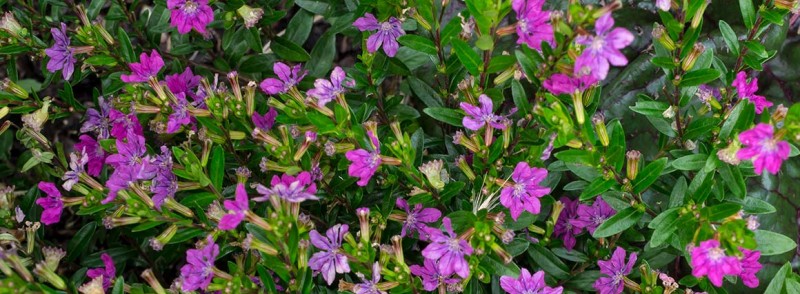
Cuphea hyssopifolia, the false heather, Mexican heather or elfin herb, is a small tropical evergreen sub-shrub belonging to Lythraceae (Loosestrife family). The plant is native to Mexico, Guatemala and Honduras. It has naturalized to Hawaii and is considered weedy there. Apart from false heather it is also known as Hawaiian Heather, Elfin Herb, Elfin Plant, Cuphea, Clammy Cuphea, Corail, Tarweed, Mexican Heather, Heather and Elfin bush. Genus name ‘Cuphea’ comes from the Greek word kyphos meaning curved or humped in probable reference to the shape of its seed capsules. The species epithet ‘hyssopifolia’ refers to the shape of the leaves which are like those of the herb Hyssop. Not a true heather, the leaves resemble to those of Scotch heather (Calluna vulgaris), thus derived its common name false heather. The plant is harvested from the wild for local use as a medicine and insecticide. It is often grown as an ornamental in the tropics – in the temperate zone it can be grown as a summer bedding plant.
Nutrition, Traditional Use and Research
The statements below describe nutrition facts, traditional use and published research. They are not health claims for our products.
- False heather (Cuphea hyssopifolia) is harvested from the wild in some regions, for example in Mexico, Bangladesh, Brazil and French Guiana, for local use as a traditional medicine and as an insecticide. It is also widely grown as an ornamental plant.
- Traditional folk uses reported from different countries include leaf and flower infusions for colds, coughs and fevers, a maceration of stem and leaves in rum rubbed onto sprains (French Guiana), and infusions for stomach complaints. These are traditional uses only. They have not been confirmed by sufficient scientific evidence.
- The plant contains phenolic compounds, which show antioxidant activity in laboratory tests. This does not show an effect in people.
- Some traditional uses mentioned in the literature concern serious conditions, such as malaria or snake bites. False heather must never replace medical care; please seek medical help for any serious health problem.
Other Facts
- It is widely grown and sold as an ornamental plant.
- The leaves and flowers of are used as an insecticide.
- Industrial oils made from these fatty acids have a range of uses, including as a de-foaming agent; a booster for soaps and detergents; and in health and beauty products.
- They can also be used in foods, mostly as vegetable shortenings.
Source or Information: https://www.healthbenefitstimes.com/false-heather/