

← Botanical Garden Silimalombu
Made from this plant – available in our shop


Basic Information:
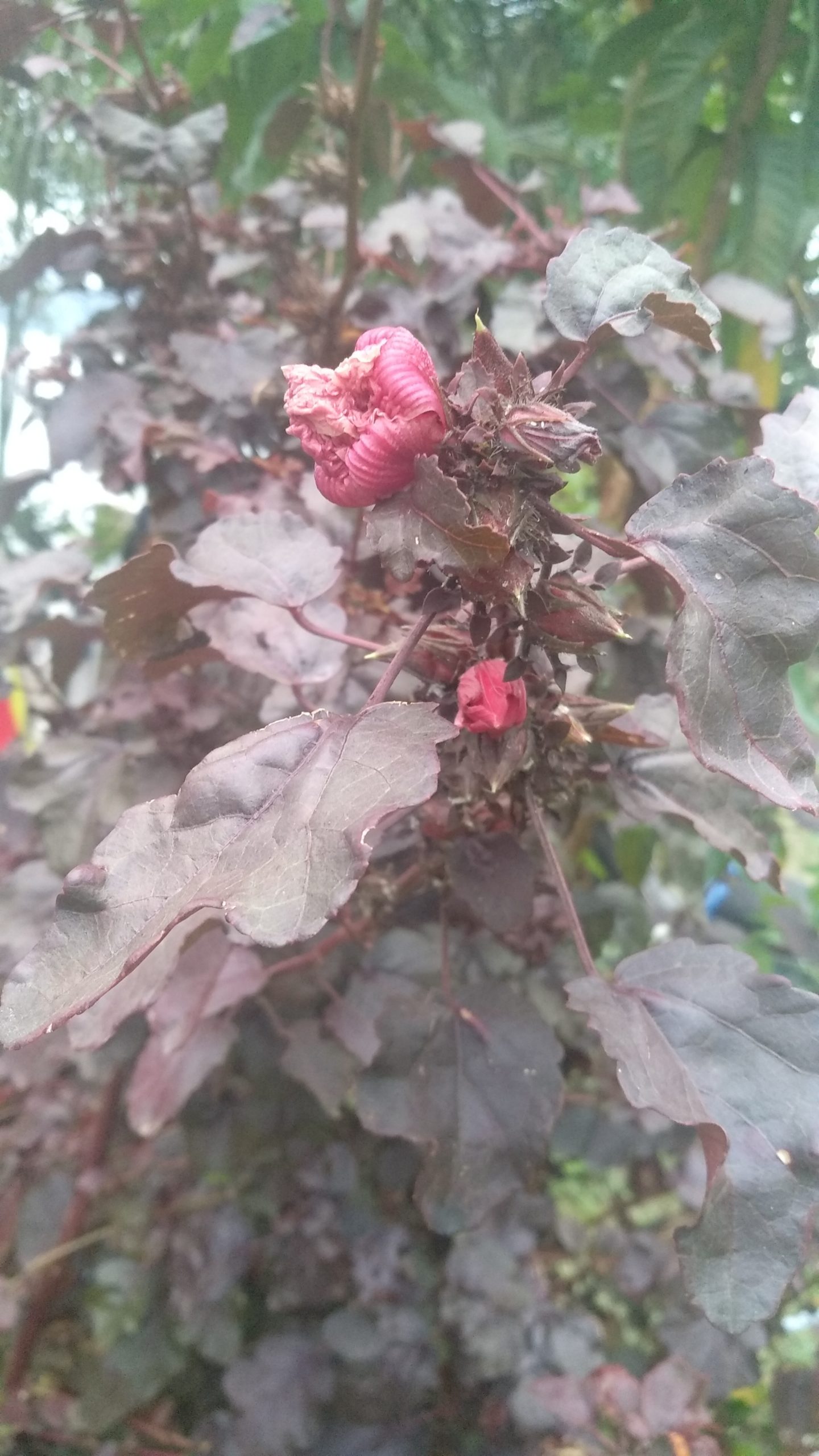
Hibiscus acetosella, the cranberry hibiscus or African rosemallow, is a flowering plant of the genus Hibiscus or rosemallow. The word acetosella is of Latin origin and is derived from an old name for sorrel (Oxalis) which comes from the sour taste experienced when eating the young leaves of the plant.[1] Hibiscus acetosella is also known colloquially as false roselle, maroon mallow, red leaved hibiscus, and red shield hibiscus.[2] It is one of the approximately 200–300 species that are seen in sub-tropic and tropic regions.[2] This ornamental is usually found in abandoned fields or open areas, marshes, and forest clearings.[2] Cranberry hibiscus is a member of a perennial group known as hardy hibiscus.[3] In contrast to the tropical hibiscus, hardy hibiscus can tolerate colder conditions, are more vigorous, longer lasting, and have larger flowers.[3] In colder climates, Hibiscus acetosella is easily an annual, but is often regarded as a perennial to zone 8–11. During one season, the plant can grow 90–170 cm (3.0–5.6 ft) tall and 75 cm (30 in) wide as a shrub-subshrub.[4]
Nutrition, Traditional Use and Research
The statements below describe nutrition facts, traditional use and published research. They are not health claims for our products.
- Cranberry hibiscus (Hibiscus acetosella) is traditionally used in West Africa and in other parts of the world as a leaf vegetable and for tea.
- Hibiscus teas, mostly from Hibiscus sabdariffa, a close relative, have been studied for their effects on blood pressure and cholesterol. Results for cranberry hibiscus itself are lacking, and no health effects can be concluded.
- Cranberry hibiscus leaves contain anthocyanins and other plant compounds that show antioxidant activity in laboratory tests.
- In traditional folk medicine in parts of Africa, an infusion of the leaves has been used as a tonic after fever and an infusion of crushed leaves for washing children. These are traditional uses only and have not been confirmed by sufficient scientific evidence.
- Cranberry hibiscus leaves are a source of vitamin C and fiber and can be part of a balanced diet.
Fun Facts:
- Leaves are eatable raw or cooked. An acid flavour with a mucilaginous texture, they can be added to salads or used in soups, stews etc[183,299,308]. They can be cooked with other foods to give them an acid sorrel-like flavour[183]. Yellow-flowered types with green leaves are most popular for this purpose, but red-flowered types with dark red leaves are also eaten[299]. Types with decorative pinkish-brown leaves are used in fresh salads, being appreciated for their special rather sour taste[299].
- The red flowers and possibly also the leaves are occasionally used to make a tea, somewhat similar to the use of the red calyces of Hibiscus sabdariffa[299].
- Root – it is edible but is very fibrous[144]. Mucilaginous, without very much flavour[144,299].
Here’s a step-by-step guide on how to grow cranberry hibiscus:
1. Choose a Planting Location:
Cranberry hibiscus prefers full sun to partial shade and well-drained, fertile soil with a slightly acidic pH of 6.0 to 6.5. If your soil is heavy or clay-like, amend it with organic matter like compost or aged manure to improve its drainage and aeration.
2. Planting:
You can grow cranberry hibiscus from seeds or young plants. If you’re starting from seeds, sow them indoors 6-8 weeks before the last frost date. Fill seed trays with a well-draining seed-starting mix, sow the seeds about 1/4 inch deep, and keep the trays warm and moist. Once the seedlings have two sets of true leaves, transplant them outdoors into individual pots or directly into the garden. If you’re planting young plants, choose a spot that receives at least 6-8 hours of sunlight per day. Dig a hole slightly larger than the plant’s root ball, gently place the plant in the hole, and backfill with soil, tamping it down gently.
3. Watering and Mulching:
Cranberry hibiscus is a drought-tolerant plant but prefers moist, well-drained soil. Water regularly, especially during hot, dry periods. Aim to provide about 1 inch of water per week, allowing the soil to dry out slightly between waterings. Mulching around the plants with organic matter like shredded leaves or straw will help to conserve moisture, suppress weeds, and regulate soil temperature.
4. Fertilizing:
Cranberry hibiscus benefits from regular fertilization to support its growth and flowering. Fertilize every 2-3 weeks during the growing season using a balanced liquid fertilizer diluted to half strength.
5. Pruning:
Cranberry hibiscus can become leggy and overgrown if not pruned regularly. Prune the plants back in late winter or early spring to remove dead, diseased, or damaged branches. You can also shape the plants to your desired form by trimming back any unruly growth.
6. Pest and Disease Control:
Cranberry hibiscus is relatively resistant to pests and diseases, but it can be susceptible to aphids, spider mites, and fungal diseases like powdery mildew. If you notice any pests or diseases, treat them promptly with organic or least-toxic methods.
7. Harvesting:
The flowers of cranberry hibiscus are ready to harvest when they are fully open and have a vibrant red color. Harvest the flowers in the morning when they are at their peak freshness. Cut the flowers just above a set of leaves.
Sources:
https://en.wikipedia.org/wiki/Hibiscus_acetosella
http://tropical.theferns.info/viewtropical.php?id=Hibiscus+acetosella